Transformation and upgrading of household appliances stimulate consumption potential

From January to June this year, enterprises in the home appliance industry achieved revenue of 914.5 billion yuan, a year-on-year increase of 7.1%; The profit was 67.49 billion yuan, a year-on-year increase of 20.2%. Facing the future, with the accelerating pace of promoting stock renewal, expanding quality supply and guiding home appliances to the countryside, the development potential of home appliance industry will be further stimulated.

Precise planning path superposition mop self-cleaning, upgraded sweeping robot makes daily cleaning easier; The air purifier equipped with brand-new sensors not only has low noise and low energy consumption, but also can remove aldehyde and supply air remotely with one button; Real-time video guidance, automatic steam cleaning, and the new steaming, roasting and frying machine make the kitchen novice fall in love with cooking … Walking around the appliance store, different categories are dazzling, and new ideas are coming.

The continuous innovation of major home appliance brands reflects the surging vitality of the home appliance industry. As a traditional dominant industry in China, the home appliance industry is also an important engine for steady industrial growth and consumption promotion. What are the new features of the home appliance industry this year? Where should we start to better stimulate the role of the home appliance market in promoting consumption and expanding domestic demand? The reporter interviewed industry experts and some home appliance companies.


Enhance innovation ability

Develop whole-house intelligence

The data shows that from January to June this year, enterprises in the home appliance industry achieved revenue of 914.5 billion yuan, a year-on-year increase of 7.1%; The profit was 67.49 billion yuan, a year-on-year increase of 20.2%.

Where does the growth resilience of home appliance industry come from? From continuous innovation towards the middle and high end.

"Since the beginning of this year, the demand for high-end products has been strong. In the second quarter, online sales of smart air purifiers increased by 8.6% year-on-year, and the growth was mainly contributed by mid-to high-end models with a price of more than 3,000 yuan. " Lu Yi, product manager of Xiaomi Environmental Electrical Appliances, introduced.

"At present, China’s home appliance market has entered a stage of upgrading characterized by high-end." The relevant person in charge of Hisense Video Technology Co., Ltd. said.

According to Xu Dongsheng, vice chairman of China Household Electrical Appliances Association, this year, the structural transformation and upgrading trend of China’s household electrical appliances industry is more obvious, and the supply of high-end products characterized by green intelligence is sufficient and effective, driving the industry to run steadily.

Walking into the intelligent open laboratory of Huawei Ark No.1 space, with a handheld intelligent central control panel, the whole house appliances are interconnected: when watching TV, you can turn on the viewing mode with one button and enjoy the immersive audio and video; When sleeping, voice awakens AI assistant, and remotely controls lighting and air conditioning …

"From smart home appliances to whole-house intelligence, the growth space of the home appliance industry is constantly expanding." Shao Yang, president of the whole house intelligent product line of Huawei Terminal Co., Ltd., said that relying on the ecology of HarmonyOS, all intelligent devices in the living space are organically connected, which better meets people’s demand for intelligent life. By the end of June this year, there were more than 200 nationwide stores of Huawei’s whole house intelligence, and more than 5,800 smart items could be connected to the whole house intelligence.

Haier founded the whole house intelligent scene brand "Three-winged Bird", and Midea released the whole house intelligent product system of "Midea Meijia" … "A variety of intelligent products cooperate, and more powerful intelligence capabilities are integrated, which is making smart home appliances more user-friendly." Xu Dongsheng said that the transformation of the whole house intelligence has not only brought personalized and customized experience to users, but also become a new engine to stimulate the growth of the home appliance industry.


Promote stock renewal

Perfect applied ecology

The data shows that from January to June, the sales of household appliances and audio-visual equipment were 427 billion yuan, and the year-on-year growth rate changed from a decrease of 3.9% last year to an increase of 1.0%. "The efficiency level of major home appliance enterprises has improved significantly, but there is still room for further expanding home appliance consumption." Xu Dongsheng said.

"China’s mature household appliances have a high penetration rate, and industry demand is more from stock renewal." Xu Jianwei, a researcher at the Industrial Research Institute of China Macroeconomic Research Institute, said that with the continuous improvement of the durability of household products, the product renewal cycle is long, and if the new features of products cannot effectively improve the pain points of consumption, the demand for renewal will shrink.

Take the air purifier as an example. "With the continuous improvement of air quality and stricter control of formaldehyde emission from building materials, the demand for formaldehyde removal from products is gradually weakening." Lu Yi said that at present, the company is developing more kinds of gas sensors and filtration technologies, and at the same time adding intelligent standby function to reduce the frequency of filter element replacement, thus reducing the use cost.

More brands are rejuvenating traditional household appliances with integration. Casarte Xingyun air conditioner integrates the functions of air conditioner, humidifier, purifier, sterilizer, air fan, etc., so that one machine can be used all the year round; Hisense integrated the ultrasonic eyewear washing device on the basis of the original product, which can wash clothes as well as glasses and jewelry … "The integration of functions is not a random combination of household appliances, but according to the user’s operating habits in a specific scene, to meet the user’s needs to the maximum extent." Xu Dongsheng said that integration is allowing traditional household appliances to release more room for growth.

"The new categories, new scenes and new applications that continue to expand are the potential for the growth of the home appliance industry." Xu Jianwei said that at present, intelligent innovation is active in the field of home appliances, but the application ecology of different brands of home appliances is not connected or even compatible enough, which has become a shortcoming that hinders the consumption of home appliances.

There are more and more intelligent devices, and it is inevitable to connect ecological islands and realize cross-brand interconnection. "The construction of whole house intelligence is inseparable from the participation of many parties such as home appliances, home, communications, the Internet, and content service providers." Xu Dongsheng introduced that in June this year, China Household Electrical Appliances Association and china communications standards association jointly issued the White Paper on Smart Home Interconnection in China (2023), which further promoted the interconnection standard of smart homes from "yes" to "good".


Expand quality supply

Expand the rural market

As the main field of traditional consumption, household appliances consumption is also an important force to restore and expand consumption. How to treat its growth prospects?

"From the perspective of industry trends, the market penetration rate of major household appliances such as refrigerators, air conditioners and washing machines is increasing year by year." Xu Dongsheng said. Relevant data show that the scale of China’s smart home appliance market exceeded 550 billion yuan in 2021, exceeded 650 billion yuan in 2022 and is expected to exceed 730 billion yuan in 2023.

"Compared with some developed countries, there is still a gap in the ownership level of every 100 smart home appliances in China, and there is a lot of room to improve its penetration rate. Home appliance consumption has great growth potential and strong motivation." Xu Jianwei said.

Stepping into the stock market, how can the home appliance industry move from high-speed growth to high-quality development to better stimulate the consumption potential of home appliances?

On the one hand, we will continue to expand high-quality supply and promote the upgrading and added value of smart home appliances.

"With the continuous optimization of the competition pattern in the home appliance industry, the industry concentration has been further improved. Driven by leading enterprises and innovative enterprises, the proportion of green smart home appliances has increased significantly, providing solid support for expanding home appliance consumption." Xu Jianwei pointed out that in order to adapt to the upgrading of household appliances consumption, it is necessary to make precise policies in the aspects of exchanging old appliances for new ones, promoting intelligent integrated household appliances, and recycling used household appliances.

Recently, the "Notice on Measures to Restore and Expand Consumption" clearly proposes to promote smart home appliances, integrated home appliances, functional furniture and other products to improve the level of intelligent greening of homes. He Yaqiong, director of the Consumer Products Industry Department of the Ministry of Industry and Information Technology, said that the next step will be to support the home appliance industry to promote customization and lean development with users as the center, realize real-time response to demand, real-time visualization of the whole process and seamless docking of resources, and continuously introduce more scene-oriented, intelligent and serialized home appliances.

On the other hand, we will continue to expand the rural market and accelerate the promotion of green smart home appliances to the countryside.

With the continuous improvement of farmers’ income and living standards, the rural market is becoming a new growth point to stimulate the demand for household appliances. The data shows that in the first five months of this year, the sales of home appliances for trade-in and green smart home appliances to the countryside increased by 83.7% and 12.6% respectively. Xu Jianwei proposed that we should speed up the construction of multi-level consumer centers, vigorously promote green smart home appliances to the countryside, and better improve the after-sales service system of rural home appliances.

The ups and downs of contemporary "gleaner"

Most people don’t know about the scavengers. In fact, in reality, a large number of garbage cleaners living in urban gaps are not homogeneous groups, and their internal division of labor and stratification have already formed. A large number of scavengers still have the expectation of gradual accumulation and upward mobility. However, despite the existence of opportunities for social mobility, they are also very fragile. A natural and man-made disaster is enough to bring their decades of struggle back to the original point.

In a village in south-central Henan province, we have repeatedly heard that most people in the village and surrounding areas have gone out to collect waste products, and some villagers have made a fortune by collecting waste products, so we asked the village cadres to introduce a villager who has been scavenging for a long time and knows the whole waste purchasing industry. This is how we met Fang Zhenye. The 65-year-old Fang Zhenye started scavenging in the 1980s, and worked in the waste industry until 2010. In the past 30 years, he went from scavenging and collecting waste at a fixed point to running a waste collection station step by step, and every step was deeply branded with the change of urban-rural relations.

(A) missed the opportunity for development and embarked on the road of scavenging

Fang Zhenye is small and thin, but his eyes are alert, he is good at talking, and his expression is clear, his logic is strong, and he is not lacking in literary talent. It can be seen that he has a solid foundation in reading when he was young.

He graduated from junior high school in 1970, and then worked as a farmer at home for one or two years. He joined the army in the second half of 1972 and worked as a soldier in Chengdu for four years. In 1975, he became the first batch of party member to join the Party, and soon became the monitor. In the fourth year of the army, he joined the cadre teaching team with excellent performance. This means that being trained with emphasis is very likely to stay in the army in the future, with broad prospects, but it has lost the opportunity by mistake. Fang Zhenye’s fiancee was not at ease at that time, fearing that she would not want to be herself after her high level, so she went to Fang Zhen’s industrial home. Unexpectedly, she just got sick there and sent a telegram to him at home, so the army asked her to treat her. Fang Zhenye was in the coaching team at that time, and was talked to by his superiors. What the army meant was that Fang Zhenye’s lover was sick and would be a drag in the future, so he could not be trained any more. He missed the development opportunity, retired and returned home.

In 1977, after returning home, Fang Zhenye continued to farm until 1985, when he began to go out to pick up rubbish. One of the main reasons for his going out is to avoid the fine of family planning. He was fined 120 yuan that year because of his super-life. Because of his limited agricultural income, he couldn’t pay the fine, so he had to find a way to hide out.

At first, Fang Zhenye, who had just returned from the army, could not pull his face down to collect junk. However, for the sake of the family’s life, he had to put down his figure and embark on this road without too high cost. He said that at that time, in order to avoid the embarrassment of meeting acquaintances, he pulled a rickshaw out early every morning and went home until he could not see anyone at night. In this way, I secretly scavenged from 1985 to 1992. At that time, the income of scavenging was 5 yuan a day, much higher than the salaries of teachers and village cadres, and the local people’s views gradually changed. By this time, 50% of the villagers had devoted themselves to scavenging.

(2) Going out to pick up rubbish: being taken in for deportation.

In order to check the scrap market, Fang Zhenye lived in Anyang’s younger brother’s house for ten days in 1992. His brother is a college student and his sister-in-law is the head nurse. After living in his brother’s house for ten days, he felt very uncomfortable. He was afraid of being looked down upon by his brother, especially his sister-in-law, so he finally gave up Anyang and went to Luoyang with his relatives in a rage. After staying in Luoyang for three months, he collected waste products wholeheartedly. Fang Zhenye said that he was not so ashamed at that time. After returning from Luoyang, he stayed at home for more than 20 days, found five or six relatives with the same temper, and went to Dalian together. Dalian is a main battlefield for many local villagers to collect waste products. Until now, some villagers still do waste products business in Dalian.

Fang Zhenye’s memory of Dalian is not good. He said, "Dalian people and Henan people have different personalities, and they are violent, especially those who pick up junk." During his stay in Dalian, he was often injured, as were several people who went with him. After staying in Dalian for about half a year, five or six people who went with him came back one after another, and Fang Zhenye himself came back. During his six months in Dalian, Fang Zhenye was taken in for three times. Generally, the police station is involved in the management. When you arrive at the police station, you will be beaten first, and then you will be sent to the detention and repatriation station overnight at most. Before you send it, you must make a statement that you will never accept waste again and will never be here again. Then the detention and repatriation station will use the money of the deported people to buy train tickets and send them to the train. Only when the train starts will the person in charge of repatriation leave. Fang Zhen escaped from the shelter twice, once was sent home, stayed for five days and went to Dalian. The reason why they want to escape is that they can’t go to their residence to get their luggage and certificates when they are caught in the police station and sent directly from the police station to the detention and repatriation station. The first two times, because someone paid for bail, it usually takes 500-600 yuan to get bail; At that time, the income from collecting waste products was only 200-300 yuan a month. "If you come out for a month or two and get caught again, it will be finished." The third time, they were sent back because Dalian wanted to clean up the foreign population. Fang Zhenye said that his ID card and discharge certificate were lost this time, not to mention money and clothes. Fang Zhenye was very angry because he lost his discharge certificate, because it could not be reissued.Later, when he received the retirement allowance, he did not have a retirement certificate and was not recognized. Being repatriated, Fang Zhenye had no choice but to return to his hometown.

Fang Zhenye mentioned that at that time, some people in the village went out to work, and every year when they came back during the Spring Festival, people got together to discuss what they could do to make money. He said, "(At that time) officials earned more than 100 yuan a month, village cadres and primary school teachers earned a few dollars a month, and garbage collectors earned 500 yuan a month, making more money than county heads." Under such circumstances, after discussion, everyone still feels that it is more reliable to collect waste products. "After coming back (from Dalian), I was tempted by money and wanted to go, but I was afraid." At this time, Fang Zhenye’s lover discussed with her husband that she went to Dalian to collect waste products, and her husband took care of the children and cultivated the land at home. She thought, "When a woman is outside, people will have some sympathy, at least not being beaten." In this way, his wife went to Dalian and collected waste products in Dalian for nearly a year until Fang Zhenye was introduced to Beijing through another relative. In 1994, Fang Zhenye and his wife went to Beijing with their 17-year-old son. Since then, from 1994 to 2011, Fang Zhen’s family has been collecting waste products in Beijing. Despite the difficulties, relying on his hard work, luck and intelligence, Fang Zhenye opened up a situation in Beijing and experienced many twists and turns.

(3) The golden age of scavengers: "If you can pick up junk for three years, you will not give it to a county magistrate."

When I first arrived in Beijing, it was difficult to find a stable place to stay. At that time, for the sake of safety, the neighborhood Committee refused to let waste collectors in. Fang Zhenye managed to find a community to help the community clean up and take care of bicycles for free. They start cleaning at 3: 00 a.m. every day. By 7: 00 a.m. before breakfast, the day’s cleaning work has been finished. During the day, they collect waste products without wasting time. From 1994 to 1995, it took a year or so for Fang Zhenye’s family to be gradually recognized by the community and basically settled down from 1995.

When Fang Zhenye’s family first arrived in this community, they were careful everywhere and spent a lot of time on building good relations with the residents of the community. During the wheat harvest season in 1994, Fang Zhenye didn’t let his eldest son go back to his hometown to harvest with him, let him stay in that community to continue his work, and specially told his son not to be too busy collecting waste products and to do a good job for others. The eldest son is sensible, does a good job, and looks likable. The old lady in the neighborhood Committee likes this child, so Fang Zhenye and his family live in the community, and the waste products are also given to them directly. For Fang Zhenye’s family to live in, the neighborhood committee cleared out the small house where the garbage truck used to be, and built another shed to store the garbage truck. So this small house of about 8 square meters became the residence of Fang Zhenye’s family, and they lived there for ten years. Fang Zhenye said, "All my three sons grew up in that community."

Fang Zhenye told his son that he must have a good relationship with people. "We are at the bottom, and people are superior. Standing in front of people, people are too dirty. How can we have contact with people? I can only help people. " Fang Zhenye’s neighborhood is the family building of the municipal party committee. He said, "The heads of all units are there, the director, the manager and the manager. Officials have a characteristic: they are willing to pay, but unwilling to contribute. He didn’t take the flowerpot, rice and a few pounds of things, so let’s take them. We have sent more (times), and when he comes down from upstairs, there will be waste or food. If we are not here, they will put the food directly on our booth. " Fang Zhenye said that at that time, half of their food was sent by residents. For him, this solved their big problem. Several sons are big boys, and they can’t cook, and they can’t cook where they live.

There are about 1000 households in this community. The waste products that Fang Zhenye collected and sold at that time ranged from paper, cartons and cans to waste plastics, scrap copper and iron. At that time, they can easily get a net income of two or three hundred yuan a month. If they are lucky, their net income can be five or six hundred yuan a month. Therefore, in the mid-1990s, there was a popular saying in Henan, "You can pick up rags for three years and give them to a county magistrate." The peak of the whole waste purchasing industry was from 1994 to 2000. In the early 1990s, the income from collecting waste products was 200-300 yuan per month, and in the mid-1990s, it reached 400-500 yuan per month. At the same time, the monthly salary of a secretary of a township party committee was only over 100 yuan, and that of a teacher was only a few dollars.

From the mid-1990s to the early 2000s, there were two main ways to collect waste products. One is not fixed, commonly known as "garbage pickers". These people carry a bag with a stick and walk around the streets. Such people account for the majority of the people who collect waste products. The other is to collect waste products at fixed points, which must be recognized by neighborhood committees and residents. The number is very small, and Fang Zhenye belongs to this category.

Fang Zhenye explained that although he started to buy in the community in 1995, he completely occupied the community after 1997. In the second half of 1997, Fang Zhen returned to his hometown to build a house. When he returned to Beijing in 1998, it was no longer an open community, and all communities were fenced off. During this period, because it is easy to make money by collecting waste products, people from all walks of life collect them. "The more people collect, the more things there are, and the less income there is. Young people with brains have begun to take crooked ways and steal. " Fang Zhenye said that the construction of a closed residential area was planned by Beijing in a unified way, and the house in his residential area and security room was built by his father and son. From the beginning of building a closed community, it became possible for a community to be contracted by one or two, and then it gradually evolved into a later type of waste acquisition-"package community" to collect waste.

As for Zhenye, although his community was closed in 1997, at that time he still cleaned the community for free in exchange for not paying the contract fee. However, by around 2000, residents began to realize that all waste collectors were rich, and some residents suggested, "Don’t look at junk collectors, they are rich, and they have to bleed." Fang Zhenye said, "At first, residents regarded waste collectors as beggars, but they were woken up at night and closed the windows." Later, it was found that it was not easy to collect waste products, and it was also interesting to sell waste products (for us). We were not allowed to collect sanitation at night, and we could not collect sanitation before 5 am. " From then on, people who collect waste products at fixed points like Fang Zhenye began to pay a certain contract fee to the neighborhood committee.

The change of the status of scavengers is actually hidden in the anxiety of urban people caused by social stratification. Scavengers originally lived in the gap of the city and were sympathized by the city people. However, with the changes in the city in the 1990s and the rising income of scavengers, they began to become a threat to the urban middle class with increasingly unstable status and uncertain future.

(four) the restructuring of state-owned enterprises, laid-off workers and the expulsion of scavengers

After 2000, another more important change has taken place in the waste collection industry, because at this time, a large number of urban workers were laid off due to the restructuring of state-owned enterprises, making urban cleaning an important channel for the employment placement of "4050 personnel", and the scavengers who had existed in the urban gap must make way at this time. For the other zhenye, the change began with the change of the neighborhood Committee. Since 2001, college students have started to work in neighborhood committees, while old ladies who used to work in neighborhood committees have to retire if they are over 55 years old. After six months’ training in street offices, college students who have just graduated from university will go to work in neighborhood committees. Around 2004, the director and deputy director of the neighborhood Committee who had been dealing with Fang Zhenye for many years were replaced. In less than three months, things changed.

One day, the new college student director came to talk to Fang Zhenye about the new policy of the community. When talking about this, Fang Zhenye pondered for a long time before he thought of the word that made him very headache at that time: "standard". He said, "I can’t even hear the word, and my head is big when I hear it." The director of the neighborhood Committee came to express two meanings. First, the community work should be "standardized" now, and booth fees should be charged for those who collect waste products; To clean up the sanitation, a special cleaning company should be set up, and it should be cleaned in a fixed period of time during the day. "Even if it is cleaned up before 7 o’clock in the morning, the leaves will come down again when it is windy during the day. Let the residents see the cleaning staff cleaning up. If you collect sanitation at night, the residents will only see that you are collecting waste. " Second, if there are unemployed people in this community who can’t find jobs, they should replace the original cleaning staff and give priority to the unemployed people in this community. Fang Zhenye said, "What community college students explain is that’ cleaning staff’ and’ cleaning’ are to ensure cleanliness at any time. You look at this explanation, so you say,’ Those who work hard rule people, and those who work hard rule people’. "

Soon, the new regulations will be implemented. Fang Zhenye said, "As a reason for arranging unemployed people, we were cleared out. But suddenly clear us out, what should I do? " He went to several old ladies to intercede, but several people said that it was no good and must be "standardized". When Fang Zhenye was worried, the residents who had arranged to take over his work came to see him. "I said what you should do, I won’t hold you up. I’ll leave as soon as I find a place. He said he wouldn’t do (cleaning). I understood after listening to his words. I asked,’ Do you sell (this job)?’ Finally, we agreed that I would give him money and I would continue to do my original work. "Unexpectedly, one day not long after, the residents’ committee suddenly gave Fang Zhenye a good lecture and forced him to leave. Fang Zhenye said, "At that time, college students were very fierce. If they were angry, they would get angry. If they said, you would slap you!" In desperation, Fang Zhenye can only find another way out.

(5) From scavengers to "waste recyclers": paying money to "package the community"

From 2004 to 2008, Fang Zhenye and his son were employed by the cleaning department of another residential property to clean up the garbage, and their salary was 700 yuan/month. Fang Zhenye proposed to the property department that he didn’t want a salary, as long as he was allowed to collect sanitation and clear away the waste. At that time, their gross income from selling waste products could reach 5,000 yuan a month, which was handed over to the property 1000 yuan.

Fang Zhenye said that cleaning up garbage is a work that requires experience, and not everyone can do it well. At that time, in the residential area where he lived, each building had 28 floors, each floor had a garbage room, and the garbage of 12 households on each floor was put in the garbage room. At 8 o’clock in the morning, the cleaning staff carried out the garbage with the bag of the trash can and collected it layer by layer. Because there is a distance from the garbage room to the elevator, and garbage bags often contain soy sauce bottles, vinegar bottles, leftovers, etc., inexperienced employees often delay time because of garbage leakage, which also makes residents dissatisfied. According to the regulations of the property department, the cleaning staff in the learning stage need to collect a building within 2 hours. Mature employees can take it in 80 minutes, and high-tech employees can take it in 50 minutes. Fang Zhenye usually comes down within an hour, so although someone else has changed in the middle of the property to collect it, he finally had to bring Fang Zhenye back because of complaints from residents.

From Fang Zhenye’s point of view, there are several principles for choosing what kind of community to enter. The first is to see whether there are more commodity buildings or family buildings in the community. The income of purchasers in commodity buildings is twice as much as that in family buildings, because all the people living in commodity buildings are rich. The second is to see how many doors are opened in this community. The more doors there are, the more uneconomical it is, because the more doors there are, the more people from outside will come in to collect waste products. The third is to look at the number of households. Fang Zhenye and his fellow villagers once discussed a general rule that people who buy waste products can earn an average of 1 yuan from each household every day.

Since the closure of the community and the standardization of waste purchase, the "waste recyclers" in the community have been managed by the property department and paid contract fees to the property. With the increasingly fierce competition for scrap purchase, the property keeps raising the contract fee. Fang Zhenye said that according to the current market, in a community of about 10,000 people, the waste recyclers have to pay 70,000 yuan to the property a year.

(6) A short turnaround under the economic crisis: renting a waste collection station.

After the 2008 Olympic Games, the economic crisis suddenly appeared in the second half of the year. Fang Zhenye said that at that time, some waste collection stations lost hundreds of thousands at once. A waste collection station usually needs millions of dollars, and the collection station usually stores a certain amount of waste before selling it. The sudden economic crisis has caused these collection stations with hundreds of thousands of goods to lose a lot of money at one time. Some people are buying stations operated by loans, but they can’t see hope, and they are also urged to pay debts. Just in the area where Fang Zhenye is located, three people who run buying stations committed suicide, all from Gushi County, Henan Province.

With many years of industry experience, Fang Zhenye has a keen grasp and analysis ability of information. After the economic crisis, the price of waste products fell to the bottom in the second half of 2008. At this time, Fang Zhenye, who had a good idea of the situation, spent all his money, borrowed some money, raised about 300,000 yuan, and rented a purchasing station with his three sons to do the business of scrap copper and aluminum. He believes that under the circumstances at that time, the price of waste products can no longer go down, and it will definitely pick up. As expected, after the end of 2008, the price of waste really began to pick up. The rent of the purchasing station contracted by Fang Zhenye at that time was 4,000 yuan/month. If it is well managed, the monthly net income can be more than 6,000 yuan; General management, net income is only 2000 yuan.

After more than two years of running the acquisition station, the economic crisis appeared again. Fang Zhenye said that when he saw the falling oil price, he quickly withdrew. According to his many years’ experience, if the price of oil rises, the price will rise; When oil prices fall, prices will also fall, and the waste business will also weaken. With such keen judgment and analytical ability, Fang Zhenye has not suffered a big loss in the acquisition of waste products, and has avoided big price fluctuations. Until returning to his hometown, Fang Zhenye has been paying attention to the market of the waste industry, but the market has been bad in recent years, so he has never made another shot. He estimated that he would never do the junk business again.

(7) Sudden storms: Cancer has exhausted years of savings.

In the second half of 2010, Fang Zhenye’s wife had a stomachache, and it was diagnosed as duodenal cancer. She stayed in a hospital in Beijing for more than 20 days and spent more than 40,000 yuan, but the hospital did not study for 3 or 4 weeks. Finally, Fang Zhen was asked to take a living specimen to the cancer hospital for testing, and the result of the test was that it was likely to become cancerous, so the hospital asked them to transfer to another hospital quickly.

In the Spring Festival of 2010, Fang Zhenye took his wife home for the New Year and returned to Beijing for treatment the following year. He spent tens of thousands of yuan, through various relationships, transferred to a hospital where a fellow villager was the vice president. According to the situation at that time, if you don’t have surgery, your wife will have a life span of up to 3 years; If you have an operation, you may die on the operating table, but you may also survive. If you live for another 20 or 30 years, doctors are 75% sure. What my wife means is that if it is only 10,000 yuan, I will have an operation. If it is more than 10,000 yuan, I will not do it. Several sons could not make a decision, and finally Fang Zhenye made a decision and had an operation. It cost nearly 0.2 million/200 thousand before and after, and finally it survived. Fang Zhenye said that before his wife got sick, he had more than 100,000 yuan in his hand. At that time, he had planned to buy a house for his son in the suburbs of Beijing. As a result, his wife’s illness almost spent the original savings.

Fang Zhenye and his wife withdrew from the waste industry. After returning to their hometown, their sons still made a living outside, but they stopped doing waste business. The eldest son bought a big truck and transported muck for more than a year. The second son, together with his daughter-in-law, contracted the sanitation of a hotel. The third son set up a grocery store in Dalian. Because he just started to open a store, he was not familiar with it. He bought fakes and was cheated. After more than two years, he lost 50,000 to 60,000 yuan. This year, he just started to turn around.

A scene in Agnès Varda’s gleaner (the picture has nothing to do with it)

Fang Zhenye’s story is only the corner of the joys and sorrows of countless scavengers in Henan Province, but it is also clearly marked by major social changes such as the detention and repatriation system and the reform of state-owned enterprises. The changes in urban-rural relations have shaped a major turning point in the life of scavengers.Fang Zhenye, who locates himself at the bottom of society,In fact, both IQ and EQ are extremely high. After years of hard work in the waste purchase market, you can accurately grasp the situation, analyze the market and make timely moves. What he lacks is just a little luck. In Henan, a region with a large population and scarce resources, there are many people with outstanding abilities, but they just lack opportunities. Occasionally, a few lucky people can achieve social mobility and get rid of the "bottom" label.

In this village of nearly 4,000 people where Fang Zhenye is located, among the 10 households with an annual income of more than 1 million (about 1% of all households in the village), 3 households started from scrap purchase, and now they run their own scrap purchase market; Of the more than 30 households (accounting for about 3% of all households in the village) with an annual income of 500-1 million, about 10 households are engaged in the work related to waste purchase, mainly engaged in waste processing or second-hand goods business, and some of them later switched from other industries to waste industry. That is to say, about a quarter of the nearly 50 households with the highest income of 5% in the village are engaged in waste-related work, accounting for about 1% in the village, and some of them did not start from the waste industry, but invested in the accumulation of other industries. Compared with that year, nearly 90% of the people in the village were involved in collecting waste products, but less than 1% completely changed their fate. The social mobility of scavengers is really difficult.

Even with high IQ and high EQ, such as Fang Zhenye, he survived the squeeze of the laid-off tide and avoided the impact of the economic crisis, but he still returned to the original point because of a serious illness of his family. Although all three sons grew up in urban communities, it is still difficult for them to stay in cities, and the hope of intergenerational mobility is still unknown.

(The name in the article is a pseudonym. )
Volvo’s new XC90 is released, with an upgraded powertrain

[Global Network Comprehensive Report] According to US media reports on February 22, the new Volvo XC90 was released on the 22nd. The car’s exterior and interior have undergone minor changes, as well as power system and energy efficiency upgrades.

Russell Datz, a Volvo spokesperson, has confirmed that the new XC90 will go on sale later this year as a 2020 model year and that the new powertrain will not be available in the early US market. Other market models will be equipped with a new braking-by-wire system, which includes a kinetic energy recovery function. The mild hybrid system works with Volvo’s existing internal combustion engine to recover lost energy during braking. Volvo expects the system to improve fuel economy by 15 per cent and reduce emissions from the XC90 by 15 per cent.

Volvo will mark the new powertrains with a "B". Other market models outside the US will be available in gasoline or diesel versions of the XC90 B5, or B6 petrol models. Volvo says these powertrains will eventually become standard for the brand.

It is not clear when the new powertrain will be available on US models, but the existing T8 powertrain has increased its battery capacity from 10.4 to 11.6kwh. Worldwide, the T6 and T8 powertrains with 2.0-liter turbocharged and supercharged inline-4-cylinder engines also feature braking-by-wire technology similar to the B5 engine. Volvo says the new car’s range has also increased by 15%. The T8 powertrain can now deliver 420 horsepower, compared to 400 horsepower previously. But Datz says the only change on US models is the larger battery size, while the T6 and T8 powertrains have not yet changed.

In terms of appearance, the 2020 XC90 features a new grille design, new wheels, and new exterior color options. In terms of interior, the new car is equipped with a new luxury wool blend trim and new leather seats. The car is available in six- and seven-seat versions.

Active safety features include a blind spot monitor and automatic steering auxiliary features for the pedestrian detection system. In addition, the new car is equipped with a lane deflection reminder function to help relieve lane traffic pressure.

The 2020 XC90 will begin production at the Torslanda plant in Sweden this May.

(Internship Compiler: Li Yumin, Reviewer: Liu Yang)

Strengthening services in Shenyang, Liaoning Province to meet the needs of special groups for drug purchase.

  Recently, Shenyang City, Liaoning Province fully implemented the joint prevention and control mechanism of the State Council, and implemented the "Class B and Class B Management" to ensure people’s life safety and health to the greatest extent and minimize the impact of the epidemic on economic and social development.

  “‘ Class b tube ’ The focus is on strengthening services and guarantees. Shenyang has strengthened disease monitoring and early warning, strengthened prevention and control of key populations, key units, key institutions and major events, and vigorously carried out health education for residents. " Liang Hongjun, Party Secretary and Director of Shenyang Municipal Health and Wellness Committee, said.

  Up to now, all 138 medical institutions above the second level in Shenyang have set up fever clinics, and all 198 community health service centers and 110 township health centers have set up fever clinics, with a maximum of more than 20,000 patients in 24 hours.

  In order to solve the problem of "drug difficulty", Hunnan District has established a drug service working group of "community party organization+grid member of market supervision institute+person in charge of pharmacy", established a docking mechanism with pharmacies in its jurisdiction, formed a demand list, and solved the drug purchase needs of special groups.

  "I sent the medicine in half a day!" On the afternoon of January 8, Zhang Derong, an 80-year-old man who lives in Caixia Community in Hunnan District, received antipyretics from the community.

  "Aunt Zhang is an elderly person living alone. After receiving the help information, we will arrange to send medicine to the elderly for the first time." Su Chang, secretary of the Party Committee of Caixia Community, said, "We have included 10 pharmacies in our jurisdiction into the community service matrix to form the residents’ drug purchase ‘ Service circle ’ , forming a ‘ from community to pharmacy to special people; Drug delivery chain ’ , solve the drug distribution ‘ The last mile ’ Difficult problem. "

  To implement the "Class B Management", the countryside is an important barrier. To this end, Shenyang has accelerated the construction of grass-roots health defense lines, done a good job in health monitoring of key personnel such as the elderly, pregnant women and left-behind children, and unblocked the green channel for referral, thus providing convenient services for Covid-19 vaccination of rural elderly people.

  Kangping county has established a multi-sectoral joint response mechanism to solve residents’ needs, taking the village as a unit, responding within 10 minutes, completing the urgent need within 1 hour, and reporting it as soon as it is beyond its ability; Set up a volunteer service team for social psychological assistance and a psychological crisis intervention team, and open a volunteer service hotline for assistance. Since January 1 ST, online and offline have solved the needs of villagers and conducted psychological counseling for 1876 times; Mobilize rural party member, volunteers and other forces, and reserve 3,165 emergency reserve forces in counties and villages.

Six years ago, he predicted that the next global crisis would stem from an epidemic.

?Editor’s Note:

Novel coronavirus is spreading around the world at an alarming rate, but we should not be surprised. Globalization has brought systemic risks. As the links between trade, finance, tourism, internet and other fields become closer and larger, they also become more complex and unstable.

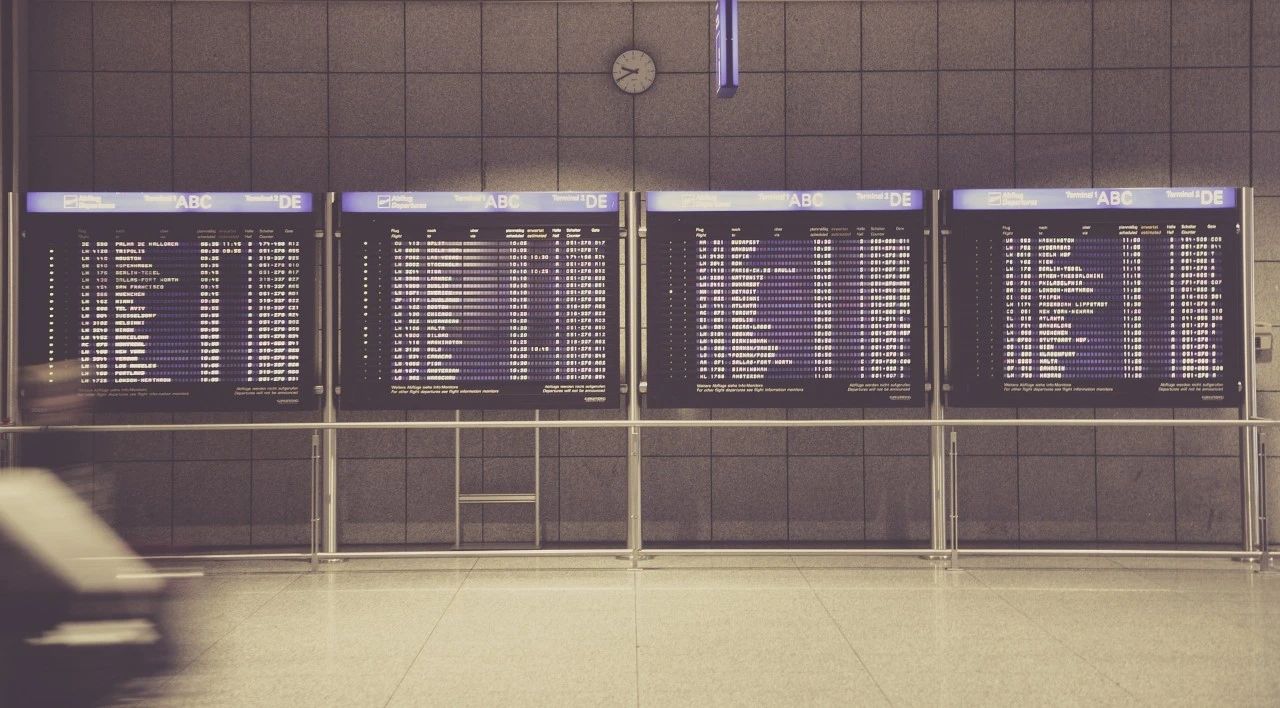
Edward Lorenz, the father of chaos theory, pointed out that a butterfly flapping its wings over Brazil may trigger a tornado in Texas, USA. The increasingly integrated and complicated global economy makes it more vulnerable to the consequences of "Butterfly Defect". For example, major airport hubs are powerful promoters of the positive effects of globalization, but they are also powerful communicators of the negative effects of globalization, and one of the "public hazards" they spread is epidemic diseases.

The PUP author from Oxford University, who is to be introduced to you today, warned governments in a book published six years ago that the systemic risks brought by globalization would threaten all of us, and the next global crisis would probably stem from the widespread epidemic of a disease.

The extensive connection of people leads to health risks

The density and intensity of contact between people and between people and animals are the decisive factors for the development and spread of epidemic diseases. In 1967, Stanley Milgram conducted an experiment to quantify global connectivity. He found that people can meet any stranger through at most six people.

In 2011, Facebook analyzed its 721 million users worldwide, trying to find out how many steps it takes to establish contact between any two people. It turns out that even though users are separated by thousands of miles, any two users only need 4.7 "friends" on average to be connected.

Population growth and the expansion of travel scope, coupled with the intentional or unintentional transshipment of animals (mice on board or mosquitoes on the plane), have rapidly increased the risk of epidemic spread. As we saw in the SARS epidemic in 2003, a toxic pathogen usually only needs short contact to infect someone and spread it. This makes airplanes and international travel become vectors of disease transmission.

High concentration of people raises health risks.

In 2025, the proportion of urban population in the world is expected to rise to 70%. The population density in Tokyo is as high as 5,847 people per square kilometer, and one in every 25 people lives in a mega-city, so it is necessary to "monitor, prepare and respond to infectious diseases". This practice is very important everywhere, especially in places with high population density and poor sanitary conditions, places where people are in close contact with animals, and places where water sources are easily polluted.

The risk of agglomeration will also amplify the connectivity risk within urban agglomerations and around the world, especially because major airport hubs are often located next to these cities. If an infectious disease originated in a metropolis, it is almost impossible to stop it from spreading around the world. Large cities are also usually inhabited by floating population and businessmen connected with other continents.

Gossip and Panic —— Information Management in Epidemic Prevention and Control

Now, all kinds of information and rumors can spread almost instantaneously through the Internet and social media. With this ability, the risk of panic related to infectious diseases has also increased dramatically, which has doubled the complexity of epidemic management.

Information management is essential, because panic may systematically aggravate the danger of the epidemic: during the epidemic prevention and control period, the government needs to control the flow of people and drugs, and if people frantically buy and hoard drugs, masks and other materials out of panic at this time, many important services will be greatly affected by people’s reaction.

When trying to prevent large-scale panic, governments may also choose to suppress some important information. In the social network of the financial world, there is evidence that "individual decision makers usually pay attention to the behaviors, decisions and even beliefs of others who have social contact with them (such as the perception of risks)." It is in this sense that innovation and technology also increase the risk of infectious diseases; In addition to tangible channels of transmission, we also need to be aware of the existence of risks related to "social" infection.

Another challenge comes from the management of the dissemination of sensitive research information. For example, the debate revolves around the US government’s decision to ask the major scientific journals Nature and Science to suspend publishing research on the evolution of H5N1 influenza virus. According to Medical News Today, although these studies were finally published, they were "shelved because the international community was worried that making these data public would make it easier for terrorists to make chemical and biological weapons".

PUP content express:

The Butterfly Defect: 

How Globalization Creates Systemic Risks, and What to Do about It


Author: Ian Goldin and Mike Mariathasan

Publication date: October 20, 2015 (paperback edition)

ISBN: 9780691168425

Highlights of the book

The Butterfly Defect emphasizes the widening gap between the new systemic risks arising from globalization and its effective management. This book shows that the turbocharged globalization power has the potential and power to undermine the stability of our society. Ian Goldin and Mike Mariathasan borrowed the latest insights from various disciplines and provided practical guidance for governments, enterprises and individuals on how to better cope with globalization and its risks.

Goldin and Mariathasan proved that systemic risk problems are now ubiquitous in supply chain, epidemic, infrastructure, ecology and climate change, economy and politics. Unless we solve these problems, they will lead to greater protectionism, xenophobia, nationalism, and inevitable de-globalization, increased inequality, conflicts and slower development.

The Butterfly Defect shows that in an interconnected world, reducing uncertainty and risk is an important task for our future development.

About the author:

Ian Goldin & Mike Mariathasan


Ian Goldin

Dean of Martin College, Oxford University, UK, Professor of Globalization and International Development Department, Oxford University.

Mike Mariathasan

Assistant Professor, Department of Finance, University of Leuven, Belgium

Seventy years later, India’s 200 million Dalits are still "like dirt", making it difficult to break through the caste barrier.

  After 70 years, India’s 200 million Dalits are still "like dirt" and it is difficult to break through the caste barrier

  [Special correspondent of Global Times in India Zhou Liangchen Special correspondent of Global Times Zhang Xiaozhu Global Times reporter Xing Xiaotong] On the 25th, India officially welcomed Cowende, the president from the untouchable class. This is the second untouchable president in 20 years. Because Cowend’s campaign opponent is also an "untouchable", this makes many people feel that "untouchable" is getting more and more attention in India, and their spring has come. The actual situation is far from so optimistic. In the decades since Indian law abolished the caste system, although the lives of the people in Park Jung Su (also known as untouchables) at the bottom have been greatly improved, and many elites have emerged from the political and business circles, they are, after all, a very small number of the 200 million untouchables. In Indian society dominated by Hinduism, especially in rural areas, most "untouchables" are still deeply bound by traditional "hidden rules". Although the modern democratic electoral system has made "untouchables" the darling of the election season, the reality is that "someone here is not disturbed by his life experience when he becomes president, and it is embarrassing to be murdered and raped there."

Data map: Indian people

  Contrast-someone is president and someone is on hunger strike.

  "A Da Park Jung Su has become the president of this country, but in a village in Andhra Pradesh, 300 Da Park Jung Su families are facing social exclusion." On the 25th, Cowende, who was born as a Dalit, was formally sworn in as the President of India, which was a big day for the large Dalit class. However, the website of India Today reported that more than 300 Dalit families in Andhra Pradesh began to hunger strike indefinitely on the same day to protest against discrimination by high caste groups.

  The incident originated on April 24th when the local people in Park Jung Su erected a statue of Ambedkar (a lawyer from "Dalit" background, known as "the father of Indian Constitution"), but it was opposed by the high caste community, and the statue was removed by unidentified people within a few hours. Moreover, because Da Park Jung Su people mainly work in agriculture but have no land, high-caste landowners refuse to continue to employ them.

  On the 26th, New Delhi TV station paid attention to the reaction of Park Jung Su community in Bonda, the northern part of Cowend’s hometown. According to the article, Cowend’s inauguration as president has hardly caused repercussions in the village of Mubarakpur, where Park Jung Su people are the majority, and everyone can’t agree whether he will bring good luck to the people of Park Jung Su. A pharmacist in Da Park Jung Su mentioned that local villagers had recently built a separation wall. According to this report, in another Da Park Jung Su village 5 kilometers away, many people still don’t know who Cowende is.

  Not only the people in Park Jung Su who are at the bottom, but also to many Indians, Cowend is a stranger. Some analysts said that the ruling People’s Party launched Cowende in order to win the votes of the "untouchables" in the 2019 general election. After all, there are 200 million people in this group. There are "untouchables" complaining. Instead of this, it is better to let "untouchables" enter the temple and get water from the well …


  Participation in the situation-from discrimination to violence

  "Dalits, like the word proletariat, stand for’ oppressed people’ and have been widely used in Indian society in recent years." Manorankin Mohanty, chairman of the Institute of China Studies in India and former professor of political science at Delhi University, said in an interview with the Global Times that "the Indian Constitution explicitly opposes caste discrimination, and the law allows Dalits to enter temples and fetch water, but that is only at the legal level. The discrimination against Dalits has not been eliminated in real life."

  About 80% of Indians believe in Hinduism, and they were born in the caste order. According to the traditional teachings of Hinduism, people of high caste are polluted just by seeing Da Park Jung Su, let alone touching it. Da Park Jung Su had to carry a bag with him when he went out in ancient times, so as not to pollute the land. If they travel during the day, they should bring a bell and ring it in advance to remind people to avoid it.

  Even today, in some Indian rural areas, if you see someone walking with their shoes in their hands instead of on their feet, it must be Da Park Jung Su. Because "Dalits" must be barefoot when they pass through the residential areas of high castes. There are also "untouchables" who ride through high-caste residential areas and have to get off and push them.

  Walking around the Indian countryside, you will find that many villages are composed of two parts. Outside the village is a small residential area, and this "village outside the village" is the residence of "Dalits". Ordinary villagers generally don’t visit the homes of "Dalits", and "Dalits" don’t visit the village except to provide services. The temples used by ordinary villagers do not allow "untouchables" to enter, and the wells do not allow them to use them.

  An article in The New York Times about Indian "caste discrimination" once told a case: a grieving father reported to the police that his daughter was missing, but the police asked, "What caste are you?" When he revealed that he belonged to a low caste, the police laughed at him and gave him no attention. A few hours later, the bodies of his 12-year-old daughter and 14-year-old niece were found hanging from a tree, and both were raped.

  According to the article, the upper castes are rarely put into prison for raping da Park Jung Su people, and if they need to defend themselves, they can always find a statement: We will never touch women with lower castes. In a case in 1995, the accusation of gang rape made by a woman in Park Jung Su was rejected by the judge on the grounds that "it is impossible for an upper-caste person to rape a lower-caste woman to get dirty".

  According to a report of the Indian National Human Rights Commission in 2010, crimes against Da Park Jung Su people occur every 18 minutes; On average, three da Park Jung Su women are raped and two are murdered every day. Park Jung Su people are not only worried about their safety, but also their overall quality of life is quite low: about 37% of Park Jung Su people live below the poverty line, 83 out of every 1,000 children in Park Jung Su die before their first year, and 12% do not live to their fifth year.

  According to the statistics of the National Crime Records Bureau of the Indian Ministry of Interior, from 2009 to 2015, there were about 227,000 recorded crimes against Park Jung Su people. From 2009 to 2013, there were 3,194 murders in Da Park Jung Su, and 7,849 women in Da Park Jung Su were raped. Because the defendants and their supporters (including the police) destroyed evidence, obstructed trials and threatened witnesses, the conviction rate in these cases was very low.


  Care-decades of "reservation policy"

  Indian society does not turn a blind eye to what happened to the Da Park Jung Su people. After India’s independence in 1947, under the vigorous advocacy of the civil rights leader of Dalit, Ambedkar, the Indian Constitution not only explicitly stipulated that caste discrimination was illegal, but also implemented a "reservation policy" for Dalit and remote tribes, that is, reserved certain places for them in government departments, state-owned enterprises and institutions of higher learning. Because these ethnic groups are listed in the schedule of the Constitution, they are called "scheduled castes" and "scheduled tribes".

  When visiting Nehru University in India, the Global Times reporter found that the proportion of care for "list castes" here is quite large. It can be said that nearly half of the students are "disadvantaged classes" who are taken care of, and many of them are far away from their hometowns in southern or northeastern India. The common feature of these students is that they are diligent and eager to learn.

  The reporter has a doctor friend at Nehru University, with dark skin and a belief in Buddhism. Later, it was pointed out that those people who look "very Indian" but believe in Buddhism are probably from Park Jung Su, but they rarely mention their origins, but struggle silently.

  In order to get rid of the fate of oppression, many people in Park Jung Su changed their religious beliefs. According to statistics, nearly 90% Buddhists, 1/3 Sikhs, 1/3 Catholics and most Muslims in India were once "untouchables". But on the whole, proselytes are still a minority.

  The Indian government has promulgated many laws for the people of Park Jung Su, such as the Civil Rights Protection Act of 1955 and the Anti-Atrocities Act of 1989. In 2015, the amendment to the Anti-Atrocities Act clearly pointed out that Da Park Jung Su people have the right to use public facilities and have the right to enter religious places of worship. If anyone intentionally interferes, it will be considered as a violation of the Anti-Atrocities Act.

  For decades, many efforts have made great achievements, especially the "reservation policy" has played a positive role in breaking the occupational hereditary caused by the caste system and improving the social status of "untouchables". Outstanding figures from "untouchable" backgrounds appear constantly. In politics, there are two presidents, the chief justice and the speaker. Mayawati, known as the "untouchable queen", has served as the chief minister of Uttar Pradesh, the most populous state, for four times.

  The attention paid to "Dalits" can be seen from this presidential election. The Indian Express said that when the chairman of the People’s Party announced Cowend as a candidate, he mentioned his caste background 15 times, and the Congress Party was forced to introduce the candidate of Da Park Jung Su. "Being a Da Park Jung Su suddenly became a virtue of Indian politics."

  However, in the eyes of some da Park Jung Su people, once the election is over, I’m afraid no one will continue to care about their situation. Moreover, although Da Park Jung Su people have a certain proportion of seats in the legislature, there are not many people who actively speak for them. On the one hand, these politicians are limited to belonging to different parties, on the other hand, they are afraid of their high-caste superiors.

  Caste-at the core and secretive.

  Some Indian scholars believe that the caste system can be said to be the core of Indian society to some extent. Just because it is at the "core", it can’t be seen on the surface, and it is secretly affecting the operation of this society. The caste system is very complicated. It is related to skin color but not absolute. It is related to occupation but not absolute.

  A reporter from Global Times once saw a doctor in a hospital in New Delhi. He met a doctor with fair skin and elegant speech. Seeing that his signature was Sharma, he was basically a Brahmin. However, in contemporary India, there are also special cases in which Hindus from lower castes convert their families to other religions or even change their surnames. Sometimes in the workplace, people will consciously dilute the traces of caste, and some people with low castes like to "hide their names", such as all calling themselves "Kumar". A reporter from Global Times called the Indian Ministry of Foreign Affairs to find a staff member Mr. Kumar whom he had met before. As a result, there was laughter on the other end of the phone: There are more than a dozen Kumar in our office. Which one are you looking for?

  Caste is a sensitive topic in India. If you ask Indians, many people will say that the caste system has died out and there is no caste discrimination. Many people are even more secretive about the situation of the "untouchables" at the bottom of the caste order. Recently, Global Times reporters interviewed several Indians, including two Indian journalists and a scholar, on the issue of untouchability, but they were all declined.

  The complexity of the caste problem in India is also reflected in the "reverse discrimination" riots that have repeatedly erupted in recent years. At the beginning of last year, a high-caste ethnic group named Jat in Haryana strongly demanded to enjoy the preferential policies given by the state to low castes. Demonstrators blocked roads, burned down vehicle buildings and destroyed water delivery channels in many parts of the state, leaving tens of millions of people in the capital area facing water shortage.

  Mohanty told the Global Times reporter that in cities, the situation of "Dalits" is much better, and many great scholars, writers, scientists, judges and civil servants all have the background of "Dalits". But in rural areas, discrimination is still common. It is a slow process to completely eliminate caste discrimination, which can not be achieved only by introducing legal provisions, but also by creating other corresponding conditions, such as land ownership and policy decision-making power.

  Mohanty believes that the appearance of two "Dalit" presidents is undoubtedly an incentive to the "Dalit" class and enhances their "pride", but it can’t bring them benefits. Democratic elections and the "Dalit" rights movement have contributed to promoting social equality, but there is still a long way to go to achieve the goal of "eliminating caste" proposed by Ambedkar.

Language is a sword! "Knife’s Tip" Exposes a New Preview: Hidden Dao in Zhang Yi Dialect


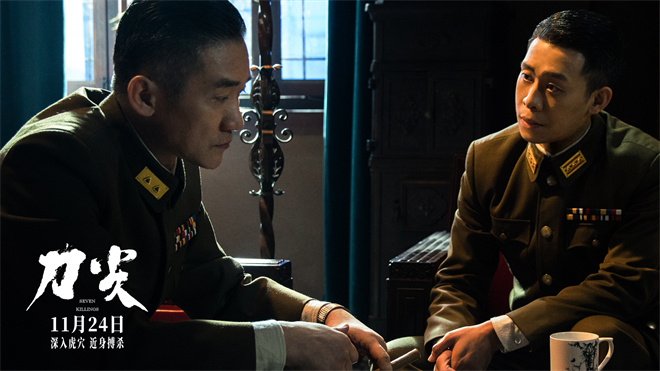
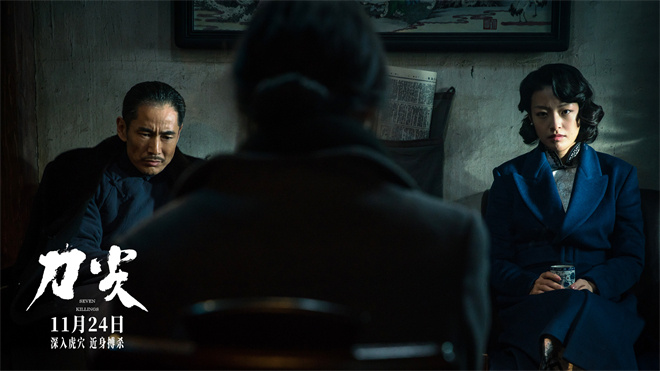
1905 movie network news Recently, the spy war movie released a brand-new trailer, playing the special agent Jin Shenshui. In the extreme environment where many forces are intertwined and everyone has their own ulterior motives, a few words seem to be light, but in fact, every sentence is extremely deliberate, killing the enemy in an instant, which can be described as "hiding the knife in the words and killing the invisible".


Based on the novel of the same name, Knife Point is directed by Zhang Yi, starring,,,, starring, and will be released on November 24th.


The story background of Knife’s Blade focuses on Nanjing, which was devastated in 1940. Director Gao Qunshu once said that in this cruel environment, "everyone is thinking about how to survive, whether it is our side, the military system or Wang Fei". Jin Shenshui (Zhang Yi), a special agent with multiple identities, lives among the forces of the Japanese military, the puppet government and the military junta all day long, not only carefully hiding his true identity, but also quietly alienating the enemy and making excuses to kill people.


In the newly released trailer, everyone in the life-and-death training ground is on thin ice, and Jin Shenshui uses the characteristics of everyone’s own ulterior motives to exert a "deviant plan" in an extremely ingenious way. In the tense situation, it turns a few words that seem to be light and light into a sword that stabs the enemy.


As director Gao Qunshu said, the most thrilling thing in spy war is often not reflected in the real fight, but "hiding a knife in words, killing people invisibly". "Everyone’s words have a deep killing trick, and it seems that if you say a few words casually, you can kill people." Jin Shenshui, a special agent who witnessed his family being killed by the Japanese invaders and suffered extreme pain, turned himself into a "motionless blade", not only to get rid of the enemies around him, but also to protect the safety of his compatriots.


Like him, Lin Yingying, who hates her country’s enemy, also shows a fighting capacity different from ordinary people under the image of calmness and gentleness. Gao Qunshu explained that the strength given to her by the organization behind her "made her support this mentality of being bold and cautious, killing people without tricks and killing people invisibly". Whether it is Jin Shenshui or Lin Yingying, you must have extraordinary courage and strategy to walk on the tip of the knife. "Either you beat your opponent to live, or you sacrifice yourself to help your comrades live."


It is difficult to make an appointment with the network! The morning rush hour will take 40 minutes in Tianhe, Guangzhou.

■ At night, the transportation department dispatches taxis to Guangzhou South Railway Station to ensure the "night returnees" to travel. (Photo courtesy of the interviewee)

■ New Express reporter Dai Guohui

Recently, many Guangzhou residents have reported that it is difficult to take a taxi through the online car platform, especially in the Tianhe business district and the Pearl River New Town around the rush hour and around 11: 00 at night. At the same time, it is also difficult to take a taxi in the residential gathering area during the rush hour.

phenomenon

Didi taxis line up hundreds of people.

It is difficult to make an appointment with a car during peak hours.

Ms. Liang, a citizen of Guangzhou, told the reporter about the difficulty of taking a taxi in Tianhe South 1 ST Road next to Tianhe City on August 17. It was Valentine’s Day, and around 11 pm, she wanted to take a taxi back to her residence near Tangxia. She used the "Didi Chuxing" APP to make an appointment for an online car. "There are more than 100 people waiting in line in front, and the system estimates that the waiting time is 1 hour and more than 20 minutes." Ms. Liang told reporters.

On the other hand, the reporter learned from a drip driver that it was even more difficult to take a taxi in Tianhe business district that day. The driver surnamed Luo told the reporter, "At that time, it usually took two hours to take a taxi in Tianhe City."

Mr. He, a citizen, told the reporter that he took a taxi at 8: 00 a.m. a few days ago. He wanted to call the network car in a hurry, but the system showed that the queue had to wait for 40 minutes. "There is no subway nearby, and the taxi is full of people. I got on the bus at 8: 40 and was late."

The reporter interviewed a number of network car users, and users have different degrees of experience about the difficulty of getting a car. However, most of these situations occur during the rush hour and around 11 pm, and the locations only occur in residential areas, Pearl River New Town, passenger hub stations and some business districts.

Network car enterprise

Users are advised to carpool.

Regarding the situation that it is difficult to get a car in some areas of Guangzhou at a specific time, the relevant person of Didi Company responded to an interview with the New Express reporter and said that it did receive such a reflection from users and suggested that users travel by car.

Didi said: "Recently, the platform has received many reports from users that the success rate of taxis in some areas has decreased during peak hours, and the waiting time has become longer. I would like to remind users to plan their travel modes as far as possible in advance, and travel more by making an appointment or carpooling, and the success rate will be relatively high …"

Taxi company dispatches vehicle security

South Station "Night Return" Travel

During the summer vacation, it is also difficult to take a taxi after 11 pm at Guangzhou South Railway Station. Mr. Zhong told reporters that it took him more than half an hour to get a network car after 11 pm on August 14th.

In order to alleviate the difficulty of taxiing, from 23:00 on Fridays and Saturdays to 0:30 the next day, Guangzhou Transportation Department organized Guangzhou Public Transport Group to arrange a certain amount of taxi capacity to Guangzhou South Railway Station to do a good job. When the capacity of Guangzhou South Railway Station is insufficient, the municipal transportation department will dispatch other empty taxis to carry passengers through the information system to ensure that citizens can enjoy taxi services in time.

On the other hand, Guangzhou Public Transport Group also encrypts the departure density of night buses in the South Railway Station area, and at the same time opens passengers who arrive in Guangzhou at night at the bottom of the special line.

interlinkage

In July, the number of violations of the network car decreased by nearly half compared with last month.

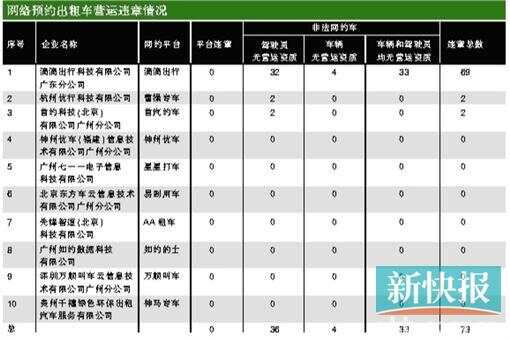
On August 20, the Law Enforcement Bureau of Guangzhou Communications Commission announced the list of companies suspected of violating the rules in taxis and online cars in July this year. By comparing the law enforcement announcements in the past three months, some enterprises have been listed on the same law enforcement project more than once. Another striking thing is that the number of violations of the network car has been greatly reduced.

● Statistics

Non-compiled enterprises with illegal operations have been listed three times.

The reporter noticed that in the investigation and handling of non-compiled drivers by law enforcement officers of the Law Enforcement Bureau of the Communications Commission, there were taxi companies on the list for three consecutive times, and more than 50 non-compiled operations were investigated. Guangzhou Lishifeng Automobile Co., Ltd. has been investigated for 50 non-compiled operations for three consecutive months; Guangzhou Xianfu Taxi Co., Ltd. was investigated for 52 cases of non-compiled operation for three consecutive months.

On the other hand, according to the published data, the operating violation rate of taxi companies has decreased compared with May. In May, the violation rate of the top taxi companies reached 19.27%. In July, the number one taxi company’s violation rate dropped to 14.49%. It should be pointed out that this data is still at a high level.

The number of violations of the network car has declined

The number of violations of the network car operation has been significantly reduced. In May, the Law Enforcement Bureau of Guangzhou Communications Commission investigated and dealt with 252 cases of illegal operation of online car, which was reduced to 143 cases in June and 73 cases in July.

The reporter learned from the Law Enforcement Bureau of the Municipal Communications Commission that the illegal operation of the network car is mainly concentrated in the driver’s license of the network car driver and the transportation license of the operating vehicle. According to the relevant regulations, the driver of the network car will face a fine of 10,000 to 30,000 yuan for operating without a license.

● Cases

The same taxi meets Baiyun Airport.

Law enforcement officers investigated and dealt with a "full clone taxi"

On August 15th, when law enforcement officers visited the south first floor of T1 departure hall of Baiyun Airport, they found that the body color of a Guangdong A***RA "Guangfa" taxi was slightly different. After systematic investigation, the taxi with the license plate number A***RA happened to be located in T2 Terminal 1 km away. After verification, the possibility of deviation caused by GPS signal instability was ruled out, and law enforcement officers initially determined that Guangdong A***RA in T1 was a fake taxi.

Law enforcement officers parked the two cars side by side for further investigation, and found that the model, license plate, ceiling light, internal control and even the advertisement of the rear glass of the car body in T1 were exactly the same as those in T2. The law enforcement officers carefully checked the license plate, frame number and invoice information. The T1 Guangdong A***RA license plate did not match the frame number, and the invoice information was also inconsistent. The invoice supervision telephone number was not the number of Guangfa Company, but it was indeed a "full clone taxi". The law enforcement officers temporarily detained the counterfeit taxi on the spot according to law.

Non-compiled list of operating violations of cruise taxi companies (top 5)

No. Enterprise Name Number of Violation Cases

1 Guangzhou Lishifeng Automobile Co., Ltd.17

2 Guangdong Xiecheng Car Rental Co., Ltd. 16

3 Guangzhou Gode Passenger Transport Co., Ltd. 14

4 Guangzhou Xianfu Taxi Co., Ltd. 14

5 Guangzhou Fanyun Taxi Company Limited 13

List of illegal operating rates of cruise taxi companies (top 5)

Serial number Enterprise name Vehicle violation rate

1 Guangzhou Huangqi Transportation Co., Ltd. 14.49%

2 Guangzhou Baiyun Yuntong Car Rental Co., Ltd. 14.35%

3 Guangzhou Guangda Taxi Co., Ltd. 12.30%

4 Guangdong Yingfeng Automobile Service Co., Ltd. 11.76%

5 Guangzhou Qide Taxi Co., Ltd. 11.24%

Idlib’s general attack is imminent! The United States and Russia launched a deep game around Syria’s "last battle"

       CCTV News:We continue to pay attention to the deep game between the United States and Russia around the "last war" in Syria. The focus of the game is Idlib province in the northwest of Syria and its surrounding areas, which is regarded as the last site of opposition armed forces and various extremist and terrorist organizations in Syria. At present, the government forces are making intensive pre-war preparations to recover this area, and the battle of Idlib, known as the "last battle" in Syria, may start at any time. And at this juncture, should I fight? How to fight? The United States, which supports the anti-government armed forces, and Russia, which supports the Syrian government, are sharply opposed, and for this reason, they have launched a confrontation and game in military diplomacy.

source map

source map

       White House: If Syria uses chemical weapons, it will respond quickly.

       Let’s look at the new trend of the US. The White House No.4 issued a statement saying that the United States is closely monitoring the situation in Idlib province of Syria. If the Syrian government uses chemical weapons, the United States and its allies will respond "quickly and appropriately".

       This is not the first time that the United States has recently threatened to use force against the Syrian government. On August 21 this year, the United States, Britain and France issued a joint statement expressing "serious" concern about the possible military actions taken by Syrian government forces in Idlib province. The United States, Britain and France also warned that if the Syrian government uses any chemical weapons, they will make an "appropriate" response.

       Russia says terrorist organizations will create chemical weapons attacks.

       The threat of use of force by the United States and its allies against Syria is not just a verbal threat. In April this year, the three countries attacked Syrian government facilities on the grounds of the so-called "chemical weapons attack". Recently, the Russian Ministry of Defense suddenly broke the news that the "White Helmets" organization with western background is planning with terrorist organizations to prepare a chemical attack and frame it on the Syrian government.

       According to the information held by the Russian military, several terrorist organizations, such as the "Conquest Front", transported eight chlorine-containing containers to the northwest of Idlib province in an attempt to make and photograph the scene of the so-called "chemical weapons attack" by Syrian government forces, and intelligence shows that the chemical weapons attack premeditated by terrorists may be changed to Hama province.

       Earlier, Western countries repeatedly accused Syrian government forces of using chemical weapons, which were firmly denied by Syria and Russia. In April this year, the so-called "chemical weapons attack" occurred in the town of Duma, Syria, and the United States, Britain and France subsequently attacked Syrian government facilities. Later, the Russian media interviewed the parties who were attacked by so-called "chemical weapons" and identified the relevant attacks as forged.

       Trump issued a warning to stop Syria from attacking Idlib.

       US President Trump No.3 also issued a warning to Syria not to "recklessly" attack Idlib province, otherwise the consequences will be very serious. He also called on Russia and Iran not to participate in the battle of Idlib. In this regard, Russian Presidential Press Secretary peskov No.4 said that Trump’s statement was ill-considered.

       Peskov: "(Idlib) hides a large number of terrorists, which leads to instability. Efforts to end this situation through political and diplomatic channels have also been hindered. Importantly, this poses a threat to our military base. This point has been mentioned by the Russian President. Everyone knows that those drones that threaten our base took off from here (Idlib). "

       Chen Bing launched a military confrontation between Russia and the United States in the Mediterranean.

       In addition to bickering, countries such as the United States and Russia are also ready to intervene in the military.

       According to media reports, the United States has deployed large destroyers equipped with Tomahawk cruise missiles to the Mediterranean waters near Idlib. A Los Angeles-class attack nuclear submarine has also entered the Mediterranean waters. Los Angeles-class nuclear submarines can carry multiple cruise missiles. In the Gulf War in 1991, the first wave of attacks by multinational forces on Iraq was launched from surface ships and Los Angeles-class nuclear submarines. However, the Pentagon said that sending nuclear submarines into the Mediterranean was a routine voyage.

       Russia is not to be outdone. The Russian navy began military exercises in the waters near Syria in the eastern Mediterranean on the 1st. The Russian Defense Ministry said that more than 25 ships from the Russian Northern Fleet, the Baltic Fleet, the Black Sea Fleet and the Caspian Fleet participated in the exercise, and there were about 30 fighters. Although Russia claims that the exercise has nothing to do with the situation in Idlib, Syria, it is widely believed that this is the largest maritime military exercise held by Russia in the Mediterranean region since the end of the Cold War, mainly to show the will and ability to oppose western countries’ intervention in the Syrian war by force.

       In addition, the Russian media also reported that the Russian Ministry of Defense is increasing the deployment of naval forces in the Mediterranean Sea, including 10 ships of various types with missile strike capability. This is also the most powerful naval force deployed by Russia in the Mediterranean since it cracked down on extreme armed forces in Syria in 2015.  

       Russia-Turkey Summit or Focus on the Battle of Idlib

       Military confrontation is accompanied by diplomatic interaction. While the United States, Britain and France are threatening to use force against Syria, the presidents of Russia, Turkey and Iran will also meet in Iran on the 7th, that is, this Friday. It is expected that the situation in Syria, especially the war in Idlib province, will be the focus of this summit.

       Some analysts believe that at the upcoming summit, Russia, Turkey and Iraq need to coordinate and solve a series of problems, including the time of the war, the scope of the attack and the target of the attack, so as to prevent the armed forces supported by the three countries from accidentally firing, and to prevent the war from expanding out of control and harming the interests of the three countries.

       Iranian foreign minister’s visit to Syria reaffirms support for Syria’s counter-terrorism

       Let’s look at Iran’s attitude. Iran is an important ally of the Syrian government. It has always supported the Bashar regime in the Syrian civil war and provided military support to the Syrian government. Different from Turkey’s attitude, when Iranian Foreign Minister Zarif visited Syria on the 3rd, he called for "thorough elimination" of "terrorists" in Idlib province.

       Iranian Foreign Minister Zarif held talks with Syrian President Bashar al-Assad, Prime Minister khamis, Foreign Minister Moalem and several senior Syrian government officials on the same day. In their meeting with Bashar, Zarif and Bashar both accused "some western countries of exerting malicious pressure on Syria and Iran" and stressed that the two countries will not give up their "principles" and efforts to maintain regional peace and stability because of pressure. When meeting with Syrian Foreign Minister Moalem, Zarif reiterated that Iran will continue to support Syria’s actions against terrorist organizations.

       Talking about the war in Idlib, Syria, which may be about to start, Zarif said that the residual terrorist forces in Idlib area "will be completely eliminated" and this area should be returned to the Syrian people as soon as possible.

       Russian Foreign Minister: I am willing to meet with the US Secretary of State at the UN General Assembly.

       While the United States and Russia launched a deep game of military diplomacy around the "last war" in Syria, they did not refuse dialogue and communication. Russian Foreign Minister Lavrov said at the end of last month that he was willing to meet with US Secretary of State Pompeo during the UN General Assembly. The website of the Russian Ministry of Foreign Affairs issued a statement on the same day saying that both Lavrov and Pompeo will attend the 73rd UN General Assembly, which will open on September 18th. Lavrov expressed his willingness to meet with the US and discuss bilateral agenda and international affairs of common concern. He also said that both sides are ready for a fruitful and constructive meeting.

       The United Nations will convene many countries to discuss the situation in Syria.

       On the 4th, UN Special Envoy for Syria De Mistura said in Geneva that he would hold talks with Russia, Turkey and Iran from 10th to 11th. Subsequently, further talks were held with representatives of the United States, Britain, France, Germany and Saudi Arabia on the 14th. Subsequently, the UN Security Council will hold a meeting on the 20th to discuss the situation in Syria. It is hoped that this will be a breakthrough to promote the political process of the Syrian issue.

Haniuda Gou Wu: This is not a competitive competition. The audience is the most important.

>Zeng Hanjiang, Xi Neiyouxin (Yuu), Zhang Teng, Han Peiquan-this is Haniuda (Amu) I want to build an international men’s team in Creation Camp 2021.

>"If you are better than singing and dancing, you already have the world’s top men’s team. If I were the boss of a brokerage company, I would be a group with different styles, compete differently and take different paths. The most important thing for my group is to make everyone feel happy all the time. "

>Amu interprets its identity as an "Entertainer" by entertaining others and spreading happiness. Before going to China to participate in Creation Camp 2021, he worked as Genese Jr in Genese, the most influential Japanese firm. This experience shaped his understanding of idols to some extent.

>Amu in 2017

>No matter what dimension we observe, Amu is a special student in Creation Camp 2021.

>In appearance, when most people are still pursuing the aesthetic of "yellow skin turned white skin", Amu appears with a bronze wheat skin; In terms of performance style, Amu is more keen on retro Disco and the strong songs and dances of the four kings of Hong Kong than the so-called men’s group singing and dancing. In terms of personal character, Amu perfectly inherited the comedy side of "Jie Family", such as appearing on the ground at the initial stage, imitating Bruce Lee in Oshima Diary, and matching his expression pack with three Chinese characters-"Oil King".

>But even a "former hero" who is full of vitality, he has never experienced 24-hour uninterrupted shooting and will feel tired in the reality show. Up to now, when Amu mentioned the life in the camp, what he blurted out was the lyrics in the theme song: "The image is spinning ~"

>A Chinese student who is also a teacher of Li and also from Uranus Entertainment, Yuu was eliminated in the first round of the program, which made Amu feel lonely. In the few shots, Amu becomes more and more silent.

>He told meYuli studioDuring that time, He Yifan, a teammate of Ergong, helped him: "He always cared about me. When eating, he would say’ ‘Amu, come and have dinner together’, sometimes he would take a shower together, and when he got up, he would call me to go to my room for training, which helped me a lot."

>Group photo of Yuu, He Yifan and Amu, Haniuda.

>Due to too few shots, many viewers didn’t Get Amu’s handsomeness for the first time through The Legend of the Hungry Wolf until the last and the top 25 students had a Solo stage on the night of the finals.

>Regarding the editing logic of reality show, Amu actually figured it out in the camp, but still chose "Off camera". This even became the reason why he and Wu Yuheng became close-both of them would take the initiative to "avoid" the camera.

>"Wu Yuheng is always very self-effacing when there are many people. He doesn’t like to steal the camera and will always tell others,’ You go, you go’. I am also like this. " As a result, the pictures of heart-to-heart talks between two people are left out of the camera, so that viewers often wonder why Amu and Wu Yuheng seem to have such a good relationship on social platforms, as if they have missed any important plot.

>Wu Yuheng mentioned by Amu in Weibo.

>In fact, Amu didn’t expect to meet so many friends as family in the camp. Although it involves competition and elimination and needs to be chosen by the audience, he never regards everyone as a competitor. "And I have a different style from them."

>"People always think Japanese idols are cute when they mention them. In fact, I don’t quite agree with this view. This is like a stereotype of Japanese idols, which is a bit extreme. Japan is also an idol with different styles. "

>Now, the sui generis Amu has lived and worked in China for some time, and he thinks that he fits well with the entertainment market in China and will stay in China at least this year.

>Yuu and auspicious brother in Amu selfie lens

>I’m used to him full of energy in the camera, but in fact, Amu in private will give people a strong sense of contrast. His habits and hobbies are a little "old school", not quite like the daily life of a 23-year-old male artist.

>For example, he doesn’t like playing mobile phones very much, and thinks that electronic products will occupy the real life space and make himself electronic, "the brain will be bad." andYuli studioWhen they met, he was sitting at his desk, carefully reading the letters written by his fans in English.

>Amu prefers to spend time meditating than 5g surfing. He is used to applying for "time for a cup of coffee" from the brokerage team every day, striving for some time alone in busy announcements.

>Recently, he has developed a new hobby in China-drinking chrysanthemum tea and ordering it every time he goes to a restaurant. "My grandmother likes China tea very much. I especially like watching chrysanthemums bloom bit by bit through the glass. That moment is really wonderful!"

>Amu self-portrait

>Today, recalling everything in Haihua Island, Amu said word for word: "Sometimes, I want to do Creation Camp 2021 again".

Exclusive dialogue: Haniuda’s martial arts X entertainment theory

>Entertainment: Have you ever experienced such a 24-hour reality show when you were in Japan before?

>Haniuda Gou Wu:In Japan, there are staff members who follow you with cameras. There is no such thing as cameras everywhere and recording all day.

>When I first entered the camp, I saw the students and cameras, and I felt that everything here was very fresh, which was completely different from that in Japan before. But after two or three weeks, I didn’t feel it. Maybe it means that I have adapted and being photographed by the camera has become a part of my life. Even people don’t care much about the camera. During group training, some students will argue when discussing the performance.

>Entertainment: Did you ever think about recording programs like this before you came to China?

>Haniuda Gou Wu:Including 24-hour boot recording, staying up late training, being so tired, etc., I didn’t expect that there would be such a big performance stage.

>When I was preparing for the first stage of Meteor Shower with Yuu, Zhang Teng and Wu Yuheng, my mental stress was the greatest, because I didn’t know what other groups were like, and I didn’t know what I could contribute to this program. My tutor and staff were not familiar with it, so I was easily anxious and had no self-confidence.

>Amu, Yuu, Zhang Teng and Wu Yuheng’s first stage Meteor Shower.

>Entertainment: You seem to have a very good relationship with Wu Yuheng? You sent a personal photo of him on your Weibo.

>Haniuda Gou Wu:I feel that our meeting is like Destiny.

>In the group Meteor Shower, Yuu and I are from Japan, and Wu Yuheng and Zhang Teng are from different places in China. Four people separated by thousands of miles finally formed a group, training together and making progress together, which is probably fate.

>I talked a lot with Wu Yuheng where the camera didn’t shoot. His English is very good. I always feel that Wu Yuheng’s personality is a little bit like Japanese. He is always very humble when there are many people, and he doesn’t like to steal the camera. He will always tell others "Go and go". It’s the same with me.

>But after getting to know him very well, we will find that he just doesn’t like facing the camera and always feels shy when performing on the stage, which is different from us. Besides, our personalities are very similar.

>Amu and Wu Yuheng shoot each other.

>Entertainment: Do you care how many shots you have?

>Haniuda Gou Wu:It’s unfair not to have your own lens and story line in such a program, right? I think if I have the opportunity to perform and have more shots, I should also become a "famous student" in the program.

>Although I gradually understood this truth in the later stage of the program, I didn’t deliberately run to the camera to show anything, and Wu Yuheng and I wouldn’t have to run to the camera to chat. From the perspective of variety editing, the friendship between other students may be more in line with what the program wants. Although the story between Wu Yuheng and me has not been filmed and released, it does not mean that our relationship is not good.

>Entertainment: Now, do you think it’s just hard training, is it useful in this program?

>Haniuda Gou Wu:It’s not that hard work is useless, butIn this kind of idol selection program, it is the most important thing to have audience affinity.

>Everyone knows that Zando dances very well. If I compare my dancing skills with him, he will definitely be the first. But if my performance can attract many people’s attention and be liked, then I also have a chance to be the first. This is the logic followed by the idol industry.The most important thing about idols is that they can be liked by people and have their own light.

>Like Gan Wangxing, he has not received any singing and dancing training, and he is not a trainee himself, but his ranking and popularity are very high. When I saw that he ranked 12th for the first time, I was very happy, which showed that my above idea was correct.Creation Camp 2021 is not an Olympic-style sports competition. Gan Wangxing has something more attractive than skill, which is the original meaning of idols.

>Amu and Ganwangxing Weibo Lianmai

>Entertainment: What’s the mood of group night? Did you ever think that you would make a debut?

>Haniuda Gou Wu:Because I love the stage very much, I feel that as long as I can stay here and have a stage. I focused all my attention on the stage performance-the opening group dance, Definition and Legend of the Hungry Wolf, but I didn’t think about anything else.

>At that time, I cried when everyone sang "It’s windy". Those photos reminded me of the road I had traveled and my family and friends. I have always been a person who tries to hide my emotions, but at that moment I can really release myself without pretending to cheer up, because I really feel very sad.

>Amu on the night of the group night of Creation Camp 2021

>Entertainment theory: how to deal with the pressure when you feel great in the camp?

>Haniuda Gou Wu:Sometimes I go to chat with riki and Jing Ji Daxiang. Riki and I will talk about many things at home and dancing. riki likes talking about his mother very much, and we will also discuss how my performance is. I often chatted with Jing Ji Daxiang when I was in Sangong, and chatting with good friends was my "Happy time" in the camp.

>Entertainment: How much are you rivals and friends?

>Haniuda Gou Wu:I never thought they were rivals, we were just friends. There are different types of idol styles between us.

>To be honest, I don’t care much about ranking in this program, because it’s not up to me to decide. I can understand the ranking of Jing Ji Daxiang, because his face is really in line with the orientation of the Chinese idol market, and everyone will think everything he does is very cute; Riki and Zando are professional dancers. If we only consider the dance performance, they are top class.

>Hiroto

>Entertainment: What kind of idol do you want to be?

>Haniuda Gou Wu:I position myself as an ——Entertainer, an all-round artist who can entertain others and make everyone feel happy.

>Entertainment: Is this why you joined Genese Office?

>Haniuda Gou Wu:In fact, my dream since I was a child is to be a well-known Hollywood actor like Johnny Depp, and I always have been. I want to create that kind of Man and cool character on the screen.

>Entertainment: What does it mean for your "Hollywood actor dream" to participate in Creative Camp 2021?

>Haniuda Gou Wu:I feel that after attending Creation Camp 2021, I am closer to this dream. Before that, I was Nobody, but now I have my own fans and more people know me.

>Creation Camp 2021, appearance of Amu and Yun

>Entertainment: Do you feel that the development of so-called "J-POP" has stagnated in recent years?

>Haniuda Gou Wu:J-POP market is different from China and South Korea, and it is controlled by monopoly enterprises. When monopolists don’t make changes and continue to operate in the same way for many years, the whole Japanese entertainment industry will not change, and there will not be so many idols with fresh faces and different styles.

>Entertainment: In your opinion, what’s the difference between being an idol in China and Japanese?

>Haniuda Gou Wu:In fact, they are all the same, but Japanese idols "have no money".

>For example, being photographed by fans in public places, there are actually some in Japan, but they are secretly photographed and won’t let you know like here; There are also some things that idols should not do, which are also prohibited in Japan.

>I think everything should have a balance. Being an idol can’t just enjoy fame and popularity. Everything is good and bad. This is the law of the world. Since I want to get some good things, I must give up some freedom. I want to say that I am ready.

>Amu on the stage of Creation Camp 2021

>Entertainment: How long do you plan to work in China at present?

>Haniuda Gou Wu:Maybe at least this year will be in China. If my father misses me, I may go back, because I haven’t been home yet because of the epidemic.

>Entertainment theory: if you stay in the entertainment room in the future, have you made any Chinese learning plans?

>Haniuda Gou Wu:Yuu and I both signed up for offline Chinese schools in Shanghai, and we are now working hard to learn Chinese.

>The new words learned recently are all from the dialogue in the textbook, such as: Shut up, date, take your time, wash the dishes … Wu Yuheng washes the dishes.

>Amu eats crabs